Wall Constructions, Sculptures and Installations
Doorskin Sculptures
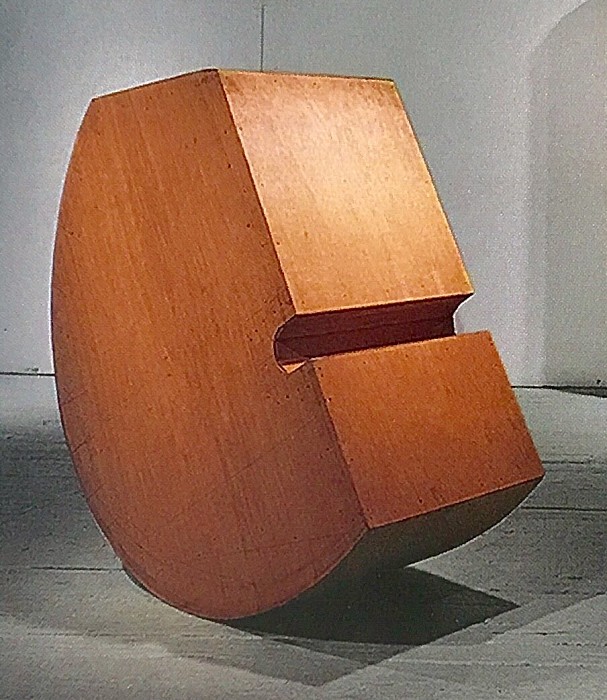
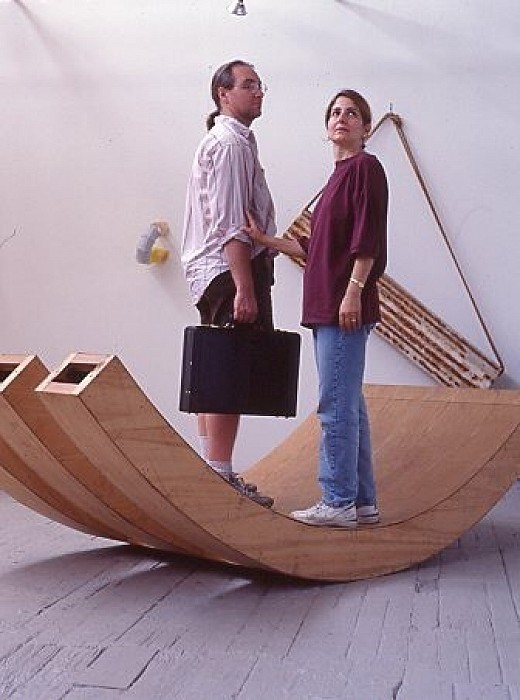
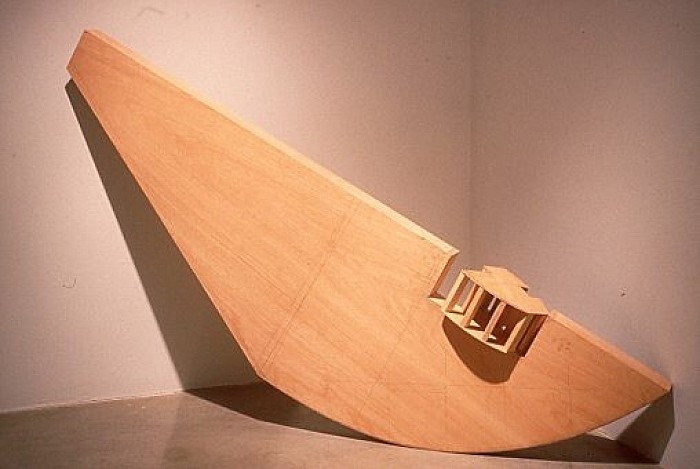
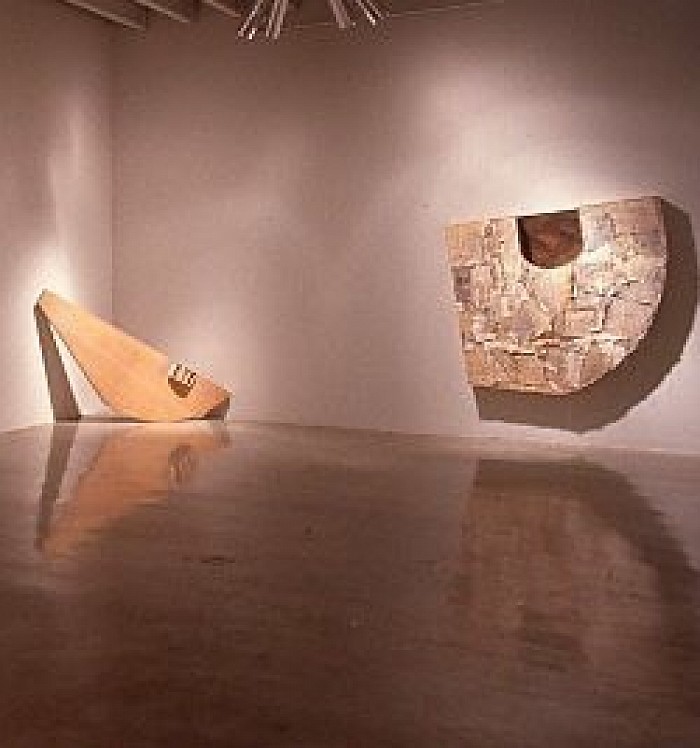
Drum Roll, 1992
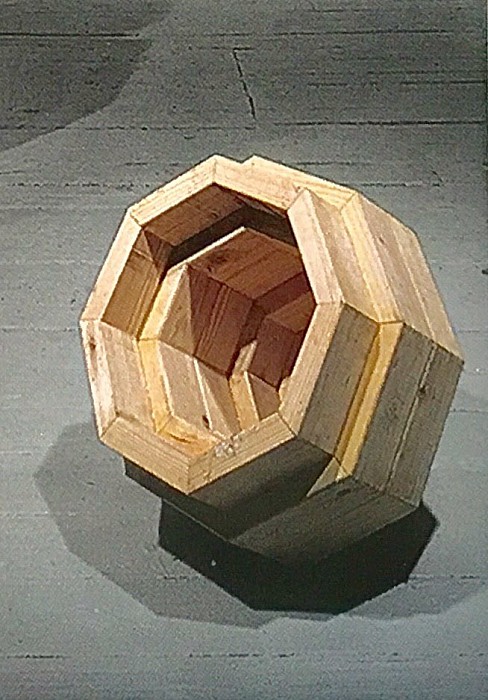
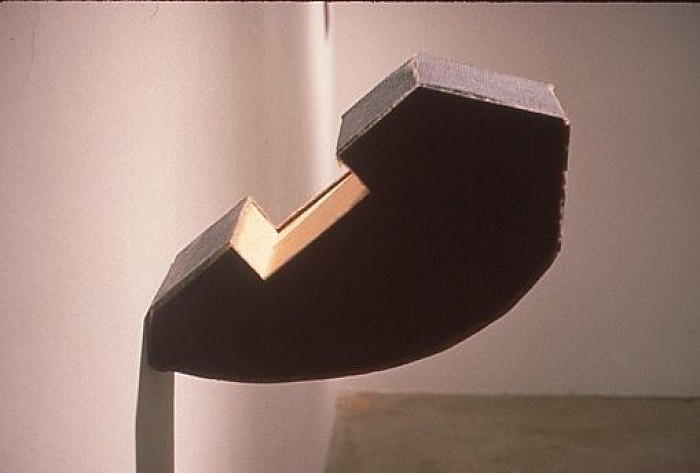
Collar Form, 1992
Artist Statement
In my Door-Skin Sculptures, I am pursuing an industrial spareness through exposed wood-and-joinery construction. A working metaphor to describe my objective is that of "stripping-down a couch" — to remove the upholstery and lining in order to expose the underlying, skeletal structure. I like both the directness and open-ended meaning that reduction can impart to form.
Conceptually, I see this work as referring to contingency and its inherent conflicts — how the things that we "depend" on can also "restrict" us. I am inspired by architectural and mechanical forms because they suggest to me various metaphors of contingency. The use of interior openings — which literally invite viewers to step inside, add an element of playful interaction and physical engagement.
—Robert M. Hopkins
1. Secular Templates
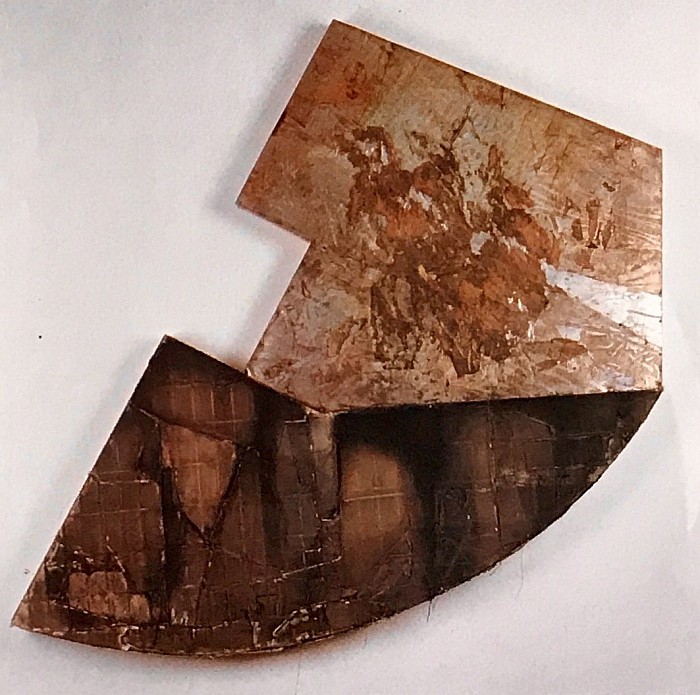
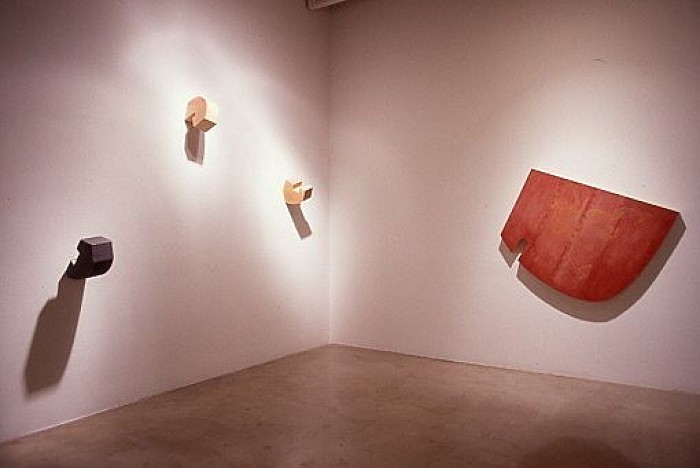
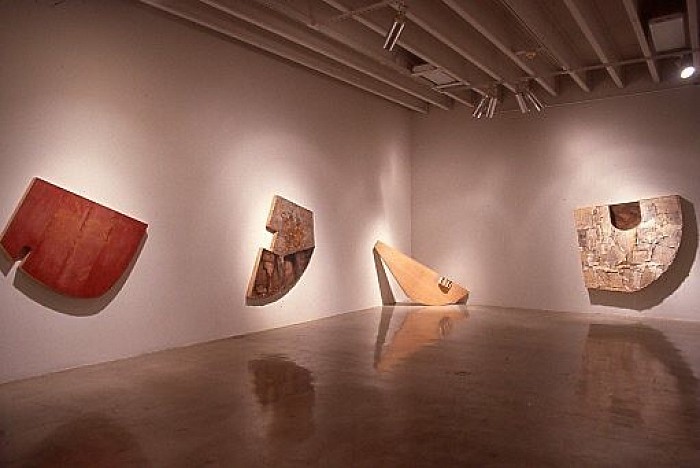
Secular Apsis, 1990
Artist Statement
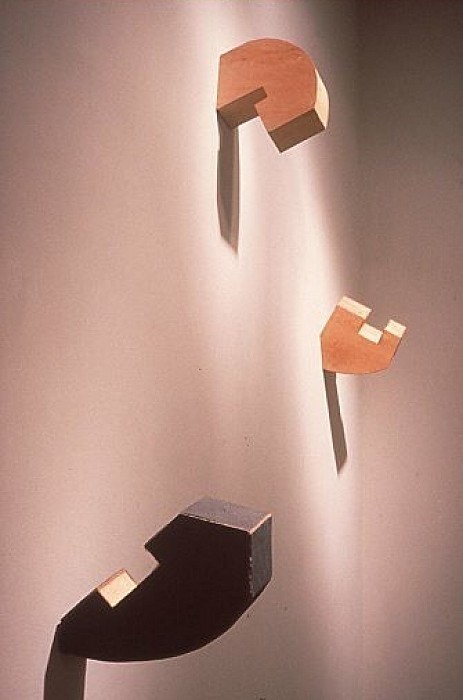
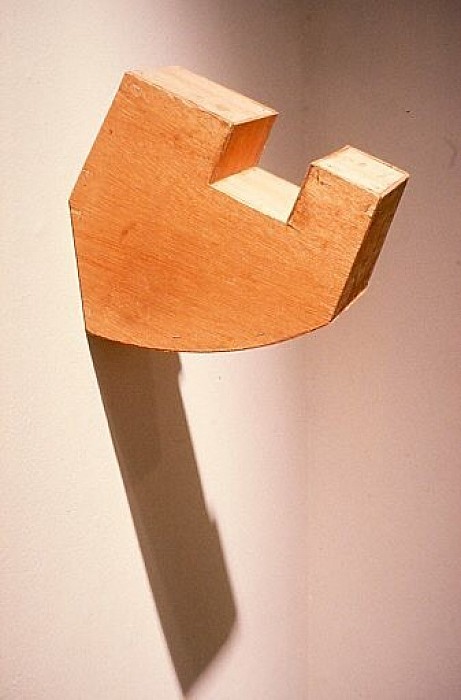
Secular Templates is a series of enigmatic wall constructions that evoke a duality between industrial and organic elements. Comprised of industrial materials such as sheet metal (galvanized and rusted), pop-rivets, wire screen, shower mats, carpet and wood, Secular Templates invokes nature-made elements through human-made materials. In so doing, my work questions absolute distinctions between humans and nature. By combining notches, slots and grooves with polygonal shapes and arcs, the pieces emblemize similarities between mechanical and organic structures, processes and motions. Perhaps the disconnected appearance of the pieces parallels human-kind’s disconnected vision of itself and it’s environment.
—Robert M. Hopkins
2. Shifting Fragments
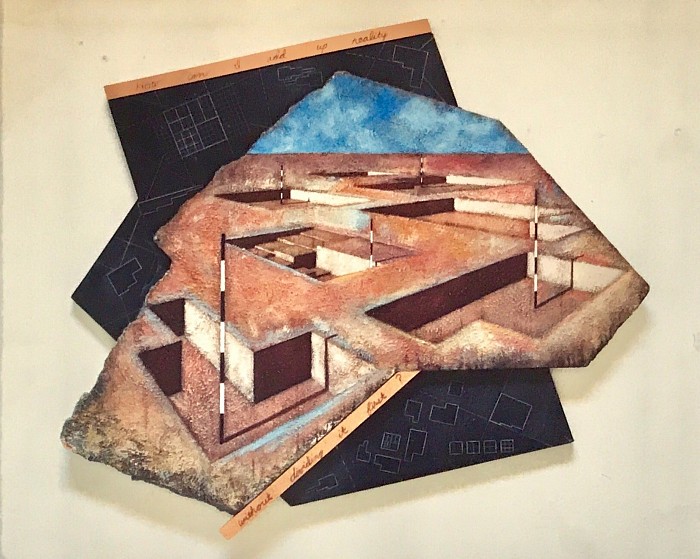
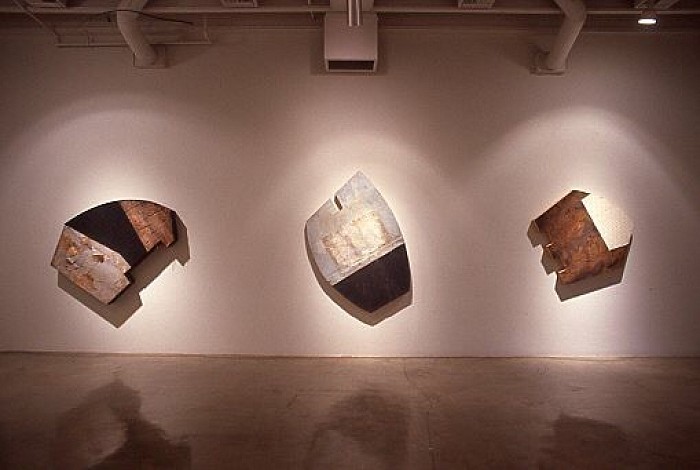
How Can I Add Up Reality Without Dividing It First? 1988
Artist Statement
Shifting Fragments is a hybrid series that integrates three parallel interests: 1) the figurative nature of language, which I employ by combining text with archetypal images, 2) the sculptural possibilities of shapes, and 3) how interacting shapes can play with right-brain and left-brain concepts. For me, combining these elements together creates a dynamic sense of movement — how "creative chaos" and "creative energy" work together.
—Robert M. Hopkins